


The 47th Workshop of The Korean Society of Non-Clinical Study (KSNS)
관리자
view : 383
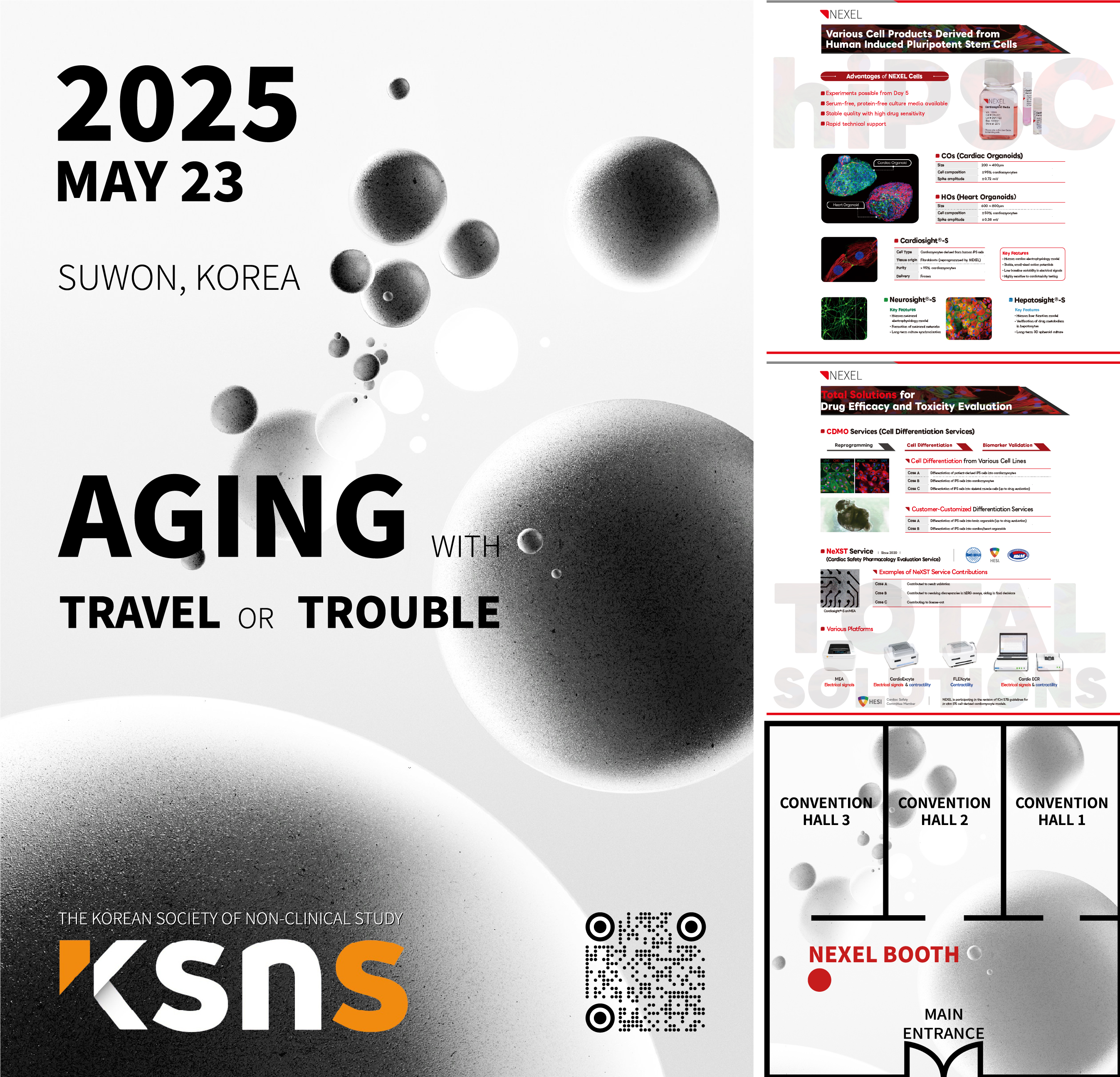
NEXEL is excited to attend the upcoming Korean Society of Non-Clinical Study (KSNS) meeting in Korea, Suwon!
As a leader in iPSC-based technologies and next-generation non-clinical testing methods, we’re looking forward to joining fellow researchers and industry experts to share insights and spark new ideas.
At KSNS, we’ll be showcasing our portfolio of iPSC-derived cell products, cardio-safety analysis services, and customized CDMO solutions to support more predictive and human-relevant research models.
If you’re attending KSNS, we’d love to connect with you!
Let’s explore how our technologies can contribute to your research and development goals.
≡≡≡≡≡≡≡≡≡≡≡≡≡≡≡≡≡≡≡≡≡≡≡≡≡≡≡≡≡≡≡≡≡≡≡≡≡≡≡≡≡≡≡≡≡≡≡≡
The central theme of this year’s 20th anniversary symposium is “Aging.” While aging is an inevitable fate for all living organisms, aging gracefully and healthily is a universal aspiration. The question we face is: how can we bring this beautiful journey to a meaningful close?
In pursuit of an answer, the first session will explore new opportunities within the full-cycle regenerative medicine R&D support program. We will also share recent advancements in therapeutics for cachexia and sarcopenia, and discuss innovative treatment strategies. The thematic session on cutting-edge drug development will highlight emerging research and technology trends, including targeted protein degradation (TPD), antibody-drug conjugates (ADCs), theranostic radiopharmaceuticals, therapeutic peptides, and the latest developments in xenobiotic analysis. In addition, we will address key areas in pharmacokinetics and toxicology, such as microbiome mouse models, and cardiotoxicity and neurotoxicity studies.
This year’s workshop will also feature a special local session focused on gene and cell therapy, showcasing research on safety and efficacy as well as advances in target safety assessment technologies. Attendees will gain insights into the latest trends shaping the field. The final session will examine the current status and future outlook of obesity and Alzheimer’s treatments, offering a broader perspective on the direction and potential of next-generation drug development.