


NEXEL "Leading the Way in Establishing 'Innovative Research and Development and Testing Methods' with Human-Induced Pluripotent Stem Cells"
관리자
视图 : 1252
Nexel Succeeds in Commercializing Functional Cell Products Derived from Human-Induced Pluripotent Stem Cells (hiPSCs) Expanding 'Organoids' to Enhance Drug Development Efficiency and Realize Animal-Free Testing Methods Sole Participant in Developing ICH Guidelines E14/S7B in Korea, Leading International Testing Standards
The era of artificial organs, a staple of science fiction movies, is drawing closer. While the idea of living forever by replacing organs with artificial ones is still a distant dream, the advancement of organoid technology is gradually turning these fictional stories into reality. The Pharmaceutical News introduces the emerging paradigm of organoids in the biohealth industry and a promising company leading this technology to shape the future.
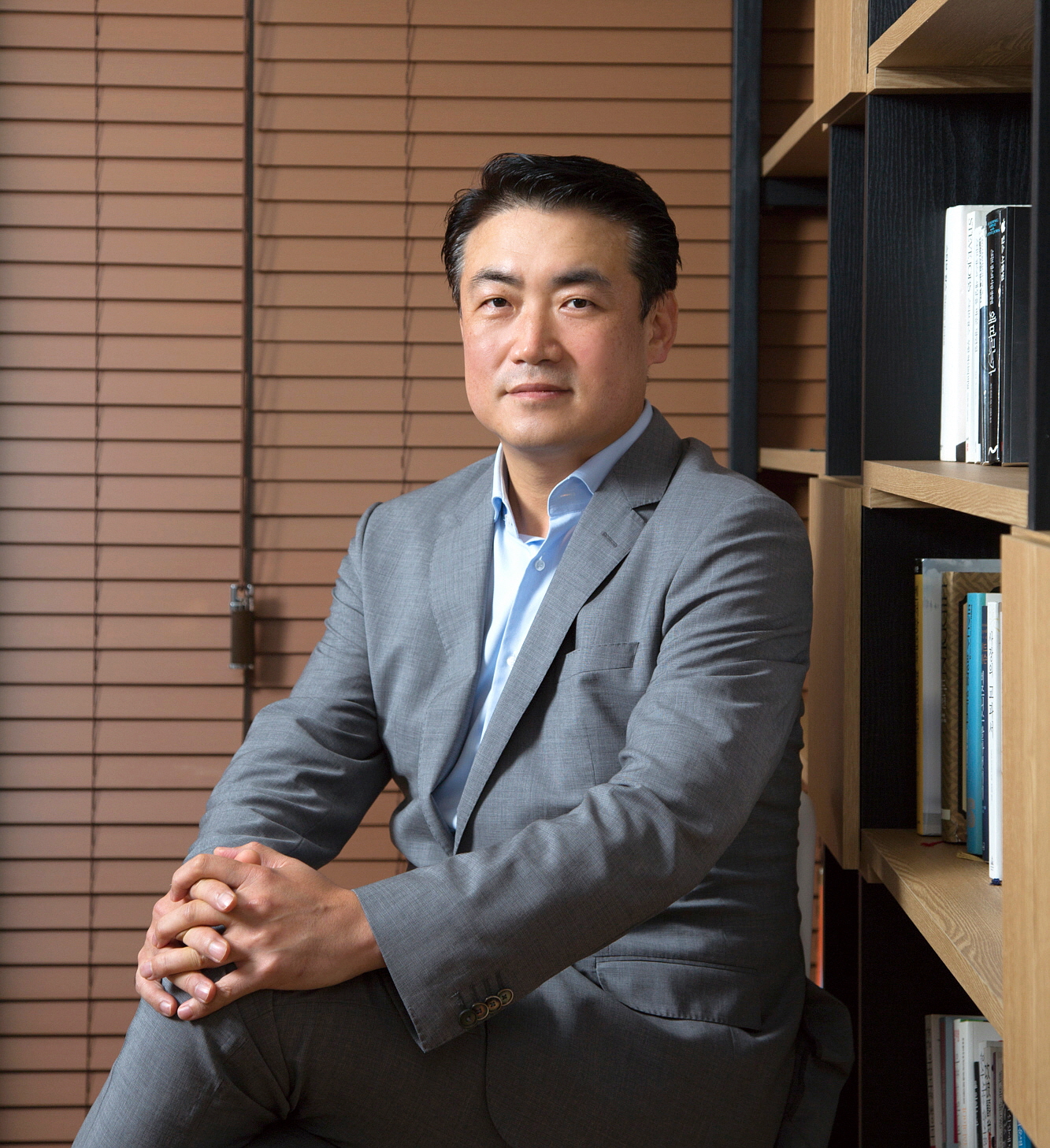
NEXEL CEO - Han Choong-seong
NEXEL, established in 2012, is the first company in Korea to commercialize 2D cell and organoid products derived from human-induced pluripotent stem cells (hiPSCs), as well as provide a platform for evaluating drug safety and efficacy using these technologies.
Nexel's core businesses include: 1) Development and sales of hiPSC-based cell and organoid products, 2) Drug evaluation services, and 3) Drug development using hiPSC-derived cells.
hiPSCs are cells derived from human somatic cells that have been reprogrammed to be pluripotent, meaning they can differentiate into all cell types of the body. This innovative technology, which has high value in regenerative medicine, research, and drug evaluation, was awarded the Nobel Prize in Medicine in 2012.
Recently, Nexel's hiPSC business has gained momentum as it aligns with global biohealth trends, such as ESG management, animal ethics, and improving the efficiency of new drug research and development.
ESG (Environmental, Social, and Governance) refers to the social responsibility of companies to pursue sustainable management. Some European countries are even restricting transactions with companies that lack ESG.
There are growing concerns about the ethical guarantee of animal experiments used in the development of pharmaceuticals and cosmetics, as well as the inaccurate research data caused by interspecies differences. Nexel's focus on hiPSC (human-induced pluripotent stem cells) can help address these issues to some extent.
The main reason Nexel's hiPSC-based businesses are attracting attention is that the company is one of the few in the world participating in the revision of international test methods. Currently, test methods using human-derived cell products are in the advanced stage. This means that Nexel is leading the provision of products that meet the latest international guidelines and appropriate test methods.
Nexel is a member of HESI (Health and Environmental Sciences Institute), the organization that develops and verifies test methods within the ICH (International Council for Harmonisation) guidelines. Nexel is the only company in Korea participating in the revision of the ICH cardiovascular safety pharmacology guideline (E14/S7B). Nexel has also acquired ISO 17025 certification for its cardiac safety assessment service using hiPSC-derived cardiomyocytes, leading the international test method standards.
Leveraging these strengths, Nexel has expanded its influence in the global innovative R&D and test method fields. Nexel formed a strategic investment and business partnership with Japan's largest CRO, CMIC, last June, and signed a hiPSC technology transfer agreement with Japan's Dai Nippon Printing, a company with 13 trillion won in annual sales, this April.
In June, Nexel also agreed to collaborate with the Johns Hopkins Center for Microphysiological Systems. Nexel is expanding its influence in the upcoming in vitro drug screening and animal-free test method market through research on microphysiological systems, organoid culture and differentiation, and mass production.
In addition to cell products, Nexel is focusing on building an organoid product pipeline. Nexel has secured the technology to commercialize cardiac, liver, and lung organoids, and has also started R&D on brain and vascular organoids. Particularly in the field of cardiac organoids, Nexel has begun to show results.
Nexel has established a dedicated organoid business division to preempt the rapidly growing organoid market. The division's main goals are the commercialization of hiPSC-derived organoids, drug efficacy evaluation using organoids, and the establishment of organoid quality standards.
Nexel CEO Han Choog-seong said, "Nexel's hiPSC-derived functional somatic cells and organoid products, as well as the drug safety and efficacy evaluation services using them, are rapidly growing with a large customer base of domestic and international pharmaceutical and biotechnology companies." He added, "We will do our best to successfully conduct an IPO (initial public offering) to improve Nexel's hiPSC technology competitiveness and achieve continuous growth."
Nexel has submitted a preliminary review application for KOSDAQ listing and is expected to go public this year. The company's outstanding technological capabilities have been proven again by passing the stricter new technology evaluation criteria last year. Nexel's clients include Pfizer, GSK, Johnson & Johnson, Bayer, Johns Hopkins University, and Celltrion.
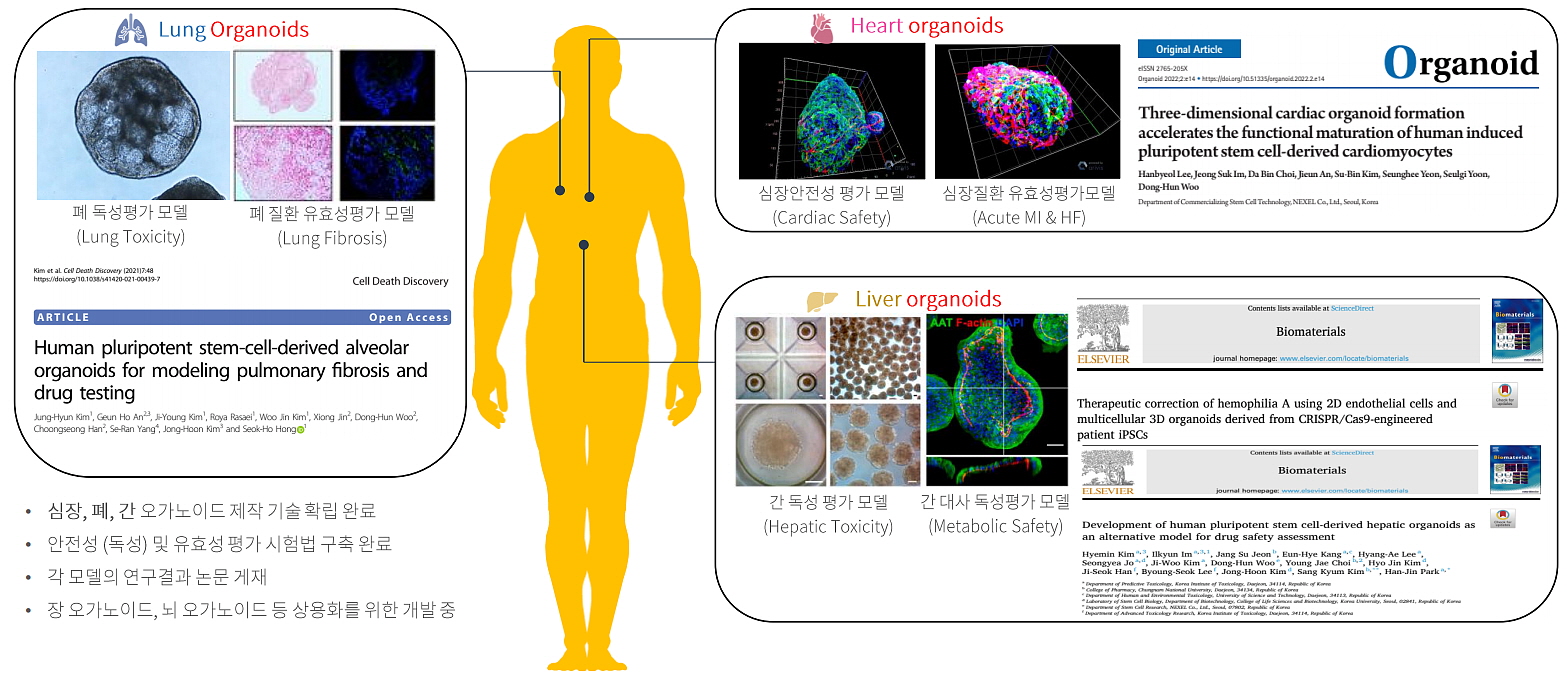
Nexel Completes Development of hiPSC-derived Cardiac, Liver, and Lung Organoid Models
Nexel is developing and selling hiPSC-derived functional cell products. Their key products include Cardiosight-S (cardiomyocytes), Neurosight-S (neural cells), and Hepatosight-S (hepatocytes). These products were developed based on Nexel's capabilities in differentiating various functional somatic cells from pluripotent hiPSCs and mass-producing them. Nexel is producing and selling over 1,000 of these products per month, and is also operating a CDMO business for custom-made hiPSC-derived cell products through its US subsidiary, NEXEL USA.
Cardiosight-S, one of Nexel's flagship products, has shown superiority over competitors in drug cardiac safety assessment. Its action potential, which represents calcium current, is most similar to human cardiomyocytes, and it exhibits high and concentration-dependent responsiveness to Isoproterenol, a hard-to-detect inotropic drug. Importantly, it has been validated for 28 reference drugs used in the new ICH guidelines for evaluating drug responses of hiPSC-CMs.
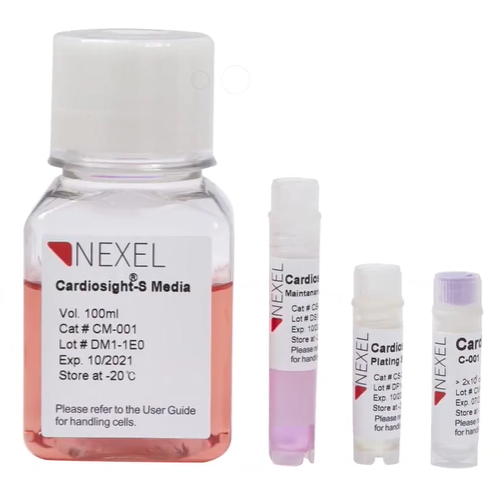
hiPSC derived Cardiomyocytes.
Nexel has unveiled its cardiac organoid as the first weapon to conquer the organoid market. Nexel has not simply combined cells to create the cardiac organoid, but has differentiated cardiomyocytes, fibroblasts, and endothelial cells in sequence from a single hiPSC through self-organization, thereby reproducing cardiac cells that are very similar to the human heart. They have also implemented ischemic reperfusion injury, which often occurs in the actual clinical field, to reproduce acute and chronic heart diseases. This enables not only normal heart research and development, but also heart research and development for diseased hearts, improving the accuracy and efficiency of research and development.
Human heart tissue is composed of cardiac muscle cells and supporting cells that regulate their function and cardiac pathology. The ratio is approximately 50% cardiomyocytes, 25% vascular cells, and 15% fibroblasts. Current organoid models are mostly in the form of spheroids that form a three-dimensional structure, which has limitations in mimicking diverse human tissues.
In contrast, Nexel has successfully developed an organoid model (a complex cell-composed cardiac organoid) that mimics the composition of the human heart tissue through self-organization, not a combination of various cell types. The cell composition ratio of Nexel's cardiac organoid is about 50% cardiomyocytes, 25% vascular cells, and 15% fibroblasts, very similar to the composition of the human heart tissue.
Nexel's cardiac organoid model also reproduced characteristics such as cardiac cell death, biomarker secretion, functional defects, changes in calcium ion handling, and changes in beating properties, as well as electrophysiological abnormalities. In particular, the accuracy of QT prolongation (long QT syndrome) evaluation through changes in the electrophysiological signal activation of cardiomyocytes by drugs has been improved. This is one of the key items in cardiac safety assessment, but there has been a lack of alternative models that can accurately evaluate it.
Nexel has published the research results of developing a multi-cellular cardiac organoid derived from hiPSC that reproduces the human cardiac cell composition and establishing a cardiac disease model that can evaluate drug efficacy in the international journal 'Cell Death & Disease' in 2021. In addition, their technologies for producing drug-metabolizing liver organoids and vascular structure-containing liver organoids from hiPSC have been published in 'Biomaterials' in 2022 and 'Stem Cell Research & Therapy' in 2023, respectively, verifying their reliability.
Nexel has also successfully completed the cryopreservation research and development essential for the commercialization of the cardiac organoid model. For commercialization, long-distance shipping and long-term storage are essential, but there was a problem of organoid damage upon thawing. Nexel has developed a technology that can maintain the organoid form even after freezing and thawing, and even maintain the ratio of cardiomyocytes within the multi-cellular cardiac organoid. In addition, they have established a mass production system, further enhancing the market competitiveness of the organoid product.
The cardiac organoid model is currently at the prototype production stage, and Nexel plans to launch a cardiac organoid model capable of toxicity evaluation and new drug candidate screening in the market this year. In addition, hiPSC-derived lung organoid models, lung fibrosis organoid models, and drug-metabolizing liver organoid models are scheduled to be released.
The CEO emphasized, "Following the commercialization of 2D cells, we will successfully launch organoid products in the market and firmly position ourselves as a leading company in the animal alternative testing and drug evaluation market, enabling toxicity evaluation and new drug candidate screening."
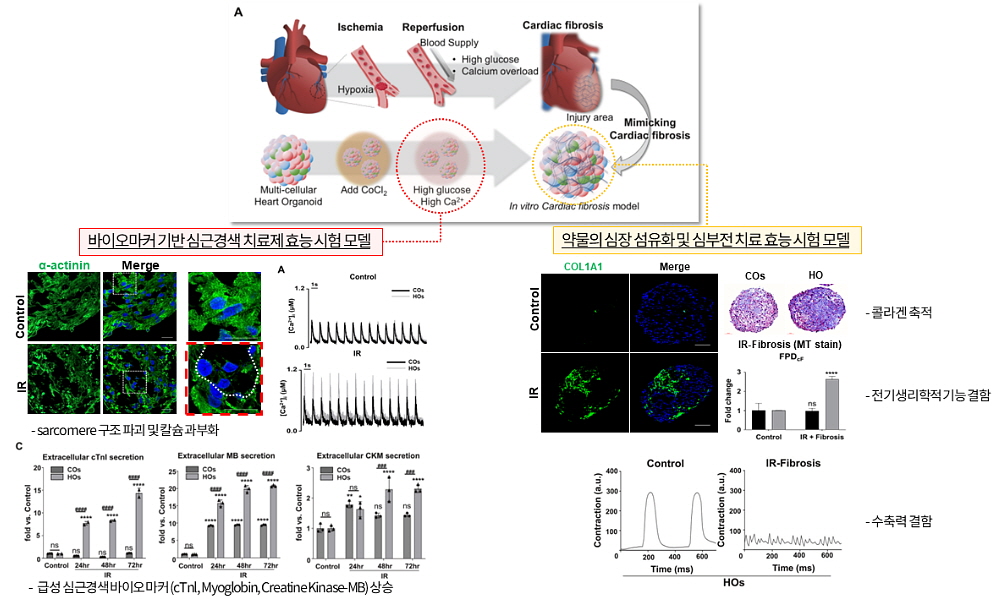
hiPSC derived cardiac organoid model
NeXST (Next Xight Screening Test): Drug Evaluation Service Utilizing hiPSC-Derived Functional Cells and Organoid Models
Nexel launched the 'NeXST' hiPSC-based drug evaluation service platform in 2020. NeXST utilizes Nexel's functional cell model, Cardiosight-S, to assess the cardiac safety of drugs according to the new regulatory guidelines (ICH E14/S7B).
NeXST helps screen for arrhythmia risk during early drug development to determine the optimal dosage, and provides pharmacological data on cardiac safety for IND approval of new drug candidates. To date, cardiac safety assessments have been performed on 84 new drug candidates, which is the highest number in Korea.
Notably, the drug cardiac safety assessment service using Cardiosight-S has received the world's first ISO 17025 certification in the field of biological testing and drug evaluation for the 'FPDcf change rate test method using induced pluripotent stem cell-derived cardiomyocytes for cardiac safety evaluation of drugs.' Clients can obtain an 'accredited test report' with the 'IRAC·MRA' international accreditation mark and the 'KOLAS' domestic accreditation mark through the NeXST service.
Nexel has secured a 3,300 sq ft research and production facility to further enhance the NeXST service, with around 2,000 sq ft operating as a negative pressure facility (clean room). Nexel has equipped the facility with all the necessary instruments to analyze every aspect of cardiac safety evaluation, ensuring a rigorously managed drug evaluation service.
Nexel has also added new services to NeXST, including drug evaluation using cardiac organoid models. In addition to cardiac organoids, Nexel has expanded its drug evaluation services to include lung and liver organoids, covering major organ assessments.
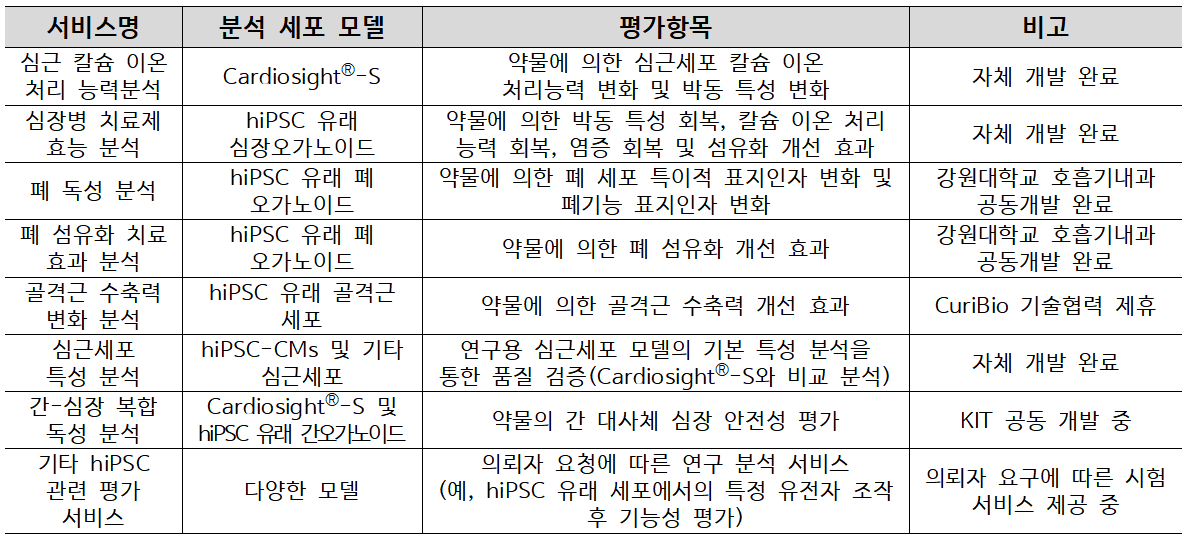
'NeXST' - Drug Evaluation Service Utilizing hiPSC-Derived Functional Cells and Organoid Models