

• Home
  • NAMs & SVC
  • NeXST SVC
  • Lung toxicity

Lung toxicity

Cardiomyocyte Viability

Human iPSC-derived AECs(Alveolar Epithelial Cells) are phenotypically and functionally resembled primary AECs and biologically relevant for pulmotoxic assessment.
Using the iPSC-derived AECs(Alveolar Epithelial Cells)-organoids for evaluation on functional effects of drugs is more clinically-relevant approach.

Applications

* Potential lung toxicity screening at early drug discovery (hit to lead).
* Optimal dose screening for preclinical study.

“Lung Toxicity Service – hiPSC-Derived Alveolar Organoid-Based Evaluation“

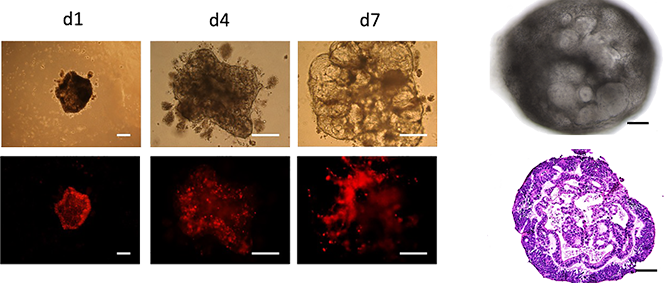
NEXEL offers a lung toxicity assessment service using human iPSC-derived alveolar epithelial cell (AEC) organoids, which closely mimic the phenotype and function of primary cells, providing greater biological relevance in toxicology studies. As shown in our results, organoids start as compact spherical structures on day 1 (d1) and progressively develop into more complex morphologies with increased cell–cell interactions by day 4 (d4) and day 7 (d7). Fluorescent staining and histological analysis further enable quantitative detection of cellular damage and toxic responses, enhancing the precision of drug toxicity evaluation.

·Key Advantages
1. Early drug development: screening for potential pulmonary toxicity (Hit to lead)
2. Optimal dose identification and validation for preclinical studies
3. Evaluation of arrhythmogenic or other toxicity-inducing drugs

With NEXEL’s Lung Toxicity Service, researchers gain access to a platform that goes beyond conventional cell-based assays, reflecting tissue-level responses for more clinically relevant toxicology evaluation.

Beyond conventional boundaries,
we deliver a bold new paradigm.
  • iPSC technology联系方式

    联系方式信息

    • 地址: 韩国首尔特别市江西区麻谷东路55,8楼(07802)

    • 营业执照号码: 109-86-37282
    • CEO: Choongseong Han

    • 电话: +82-2-2088-8886
    • 传真: +82-2-2088-8884
    • 电子邮箱: support@nexel.co.kr